

Travertine Repair Denver
Travertine repair in Denver means filling chips, holes and cracks in natural stone, re-grouting loose joints, then cleaning and sealing the surface so it stays protected. Most small and medium repairs can be done in place, without tearing out the floor. If your travertine looks pitted, stained or has loose edges, a specialist can usually restore it.
What Is Travertine and Why Does It Need Repair?
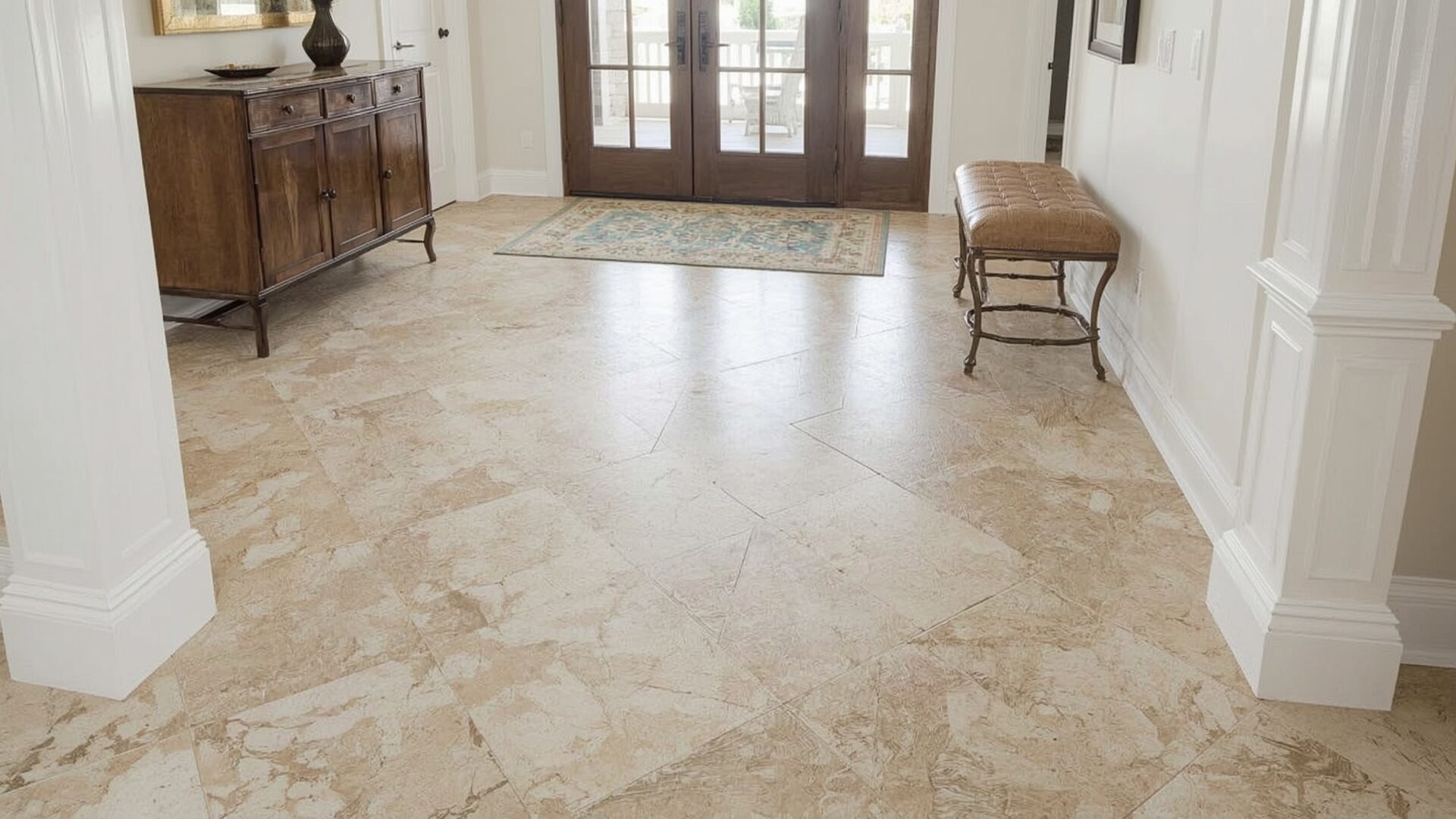
Travertine is a natural limestone formed around mineral springs. It is known for its warm tones, soft veining and the tiny natural holes that give it character. Those same holes, plus its relatively soft surface, are why travertine needs more care than porcelain or ceramic tile.
Across the Denver metro, homeowners use travertine on entryways, kitchen floors, shower walls and outdoor patios. Over the years, a few things tend to happen:
- Natural pits and voids open up as the original filler wears away.
- Chips form along tile edges when something heavy is dropped.
- Grout lines crack or loosen from seasonal temperature swings.
- Acidic cleaners dull the surface and leave etched, cloudy spots.
- Water and spills soak into unsealed stone and leave stains.
The good news is that every one of these problems has a practical fix. Travertine repair in Denver is about matching the repair to the damage, not replacing the whole floor.
How Do You Fix Chipped or Pitted Travertine?
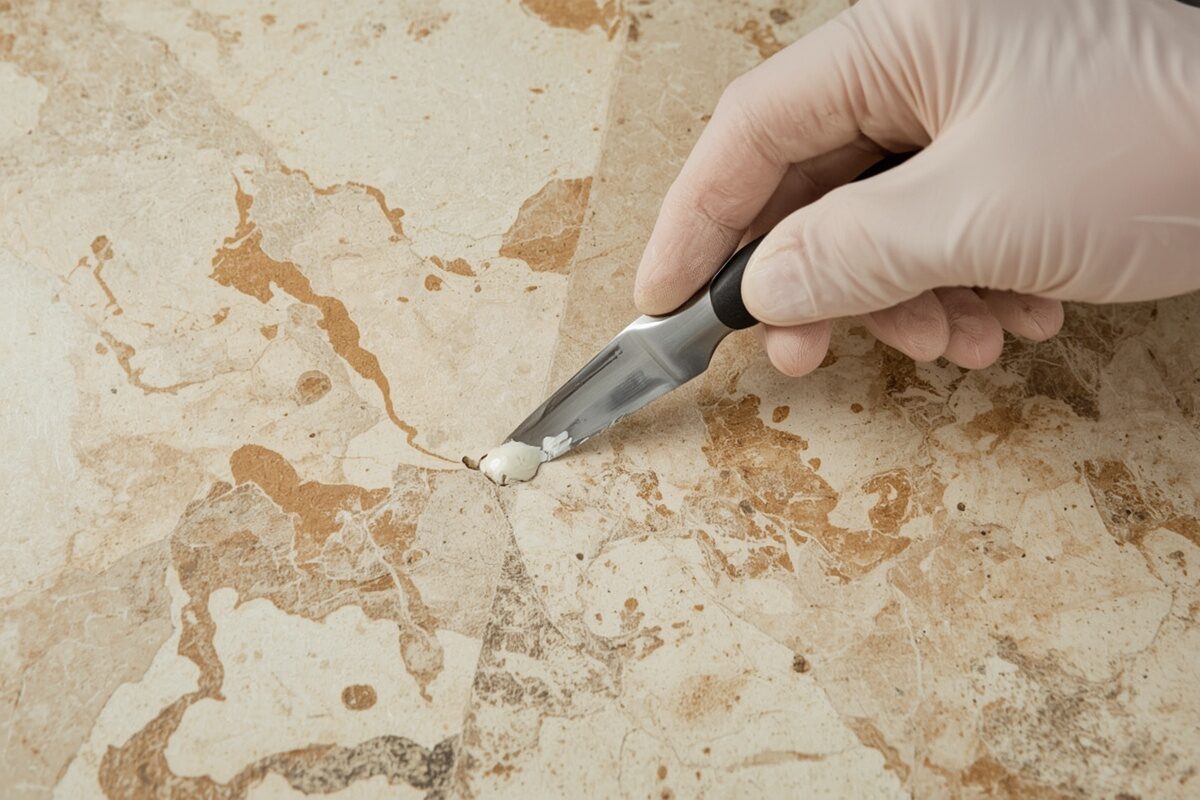
For chips and pits, a technician cleans out the damaged spot, then fills it with a stone-safe filler or epoxy matched to the surrounding color. Once cured, the area is honed so it blends with the rest of the tile. Done well, the repair is hard to find by eye.
Small chips on tile edges are the easiest. Larger holes need more patience because the filler should be built up in thin layers to avoid shrinking or sinking. Deep pitting across a whole floor is usually handled by filling every void, then honing the entire surface so the finish is even.
Why Matching the Color Matters
Travertine ranges from ivory to walnut, often within a single tile. A repair that is one shade off will stand out in bright Colorado sunlight. Experienced technicians tint the filler on site and test it in an out-of-the-way spot first.
Can Cracked Grout Between Travertine Tiles Be Repaired?
Yes. Cracked or crumbling grout can be removed and replaced in the damaged areas, which stops moisture from getting under the stone and keeps tiles from shifting. This is a spot repair, not a full tile tear-out. After the new grout cures, the joints are sealed along with the stone.
Front Range homes see big swings between hot afternoons and freezing nights. Those swings make grout and stone expand and contract, so cracks along joints and at doorways are common, especially in Denver, Centennial, Parker and Castle Rock.
How Often Should Travertine Be Cleaned and Sealed?
Most travertine benefits from a fresh coat of sealer every one to three years, depending on foot traffic and how porous the stone is. A simple test helps: drop a little water on the surface. If it darkens the stone and soaks in within a minute or two, it is time to reseal.
Sealing does not make travertine stain-proof, but it gives you time to wipe up spills before they sink in. Cleaning first is essential, because sealer locks in whatever is on the surface.
Cleaning Do’s and Don’ts
- Use a pH-neutral cleaner made for natural stone.
- Skip vinegar, lemon, bleach and other acidic or harsh products. They etch the surface.
- Blot spills quickly instead of wiping, which spreads them.
- Use mats at entries to keep grit from scratching the stone.
When Is Repair Not Enough?
Repair works well for surface damage. Some problems are a different story: tiles that are cracked all the way through, floors that move because of a failing subfloor, or large areas with widespread water damage. In those cases the underlying issue has to be addressed first. A specialist can look at the floor and tell you honestly whether repair is the right call. The Grout Specialist focuses on cleaning, sealing, caulking and repair, and does not take on new tile installation or tear-outs.
What Does a Professional Travertine Repair Visit Include?
Every home is different, but a typical visit follows a clear process:
- Inspection. The technician checks for chips, voids, loose tiles, grout condition and prior sealer.
- Deep cleaning. Dirt, soap film and old residue are removed so repairs bond properly.
- Repairs. Chips and holes are filled and color matched. Failed grout is replaced.
- Honing or polishing. The surface is blended so repairs disappear into the floor.
- Sealing. A quality penetrating sealer protects the stone going forward.

Frequently Asked Questions
Can travertine repair be done without removing the tile?
Yes. Most chips, pits, cracked grout and surface wear are repaired right where the tile sits. Replacing tile is only needed when a tile is broken through or the subfloor is failing.
Will the repair match the rest of my floor?
A skilled technician tints the filler to match your stone and blends the area by honing. Because travertine varies tile to tile, matching is a craft, and a small test spot is a good sign of careful work.
Is travertine a good choice for a Colorado bathroom?
It can be, as long as it is sealed and cleaned with stone-safe products. Showers and tub surrounds see constant moisture, so they need resealing more often than dry floors.
What causes the small holes in travertine?
They are natural voids from the way the stone forms. Manufacturers fill them at the factory, but filler can wear out over time, which is why holes reappear on older floors.
Can I use a steam cleaner on travertine?
Be careful. Steam can pull moisture and dirt into porous stone and may loosen grout. Ask a professional before steaming natural stone.
Get Your Travertine Looking Its Best
Travertine is a beautiful, long-lasting surface when it is repaired and protected correctly. If you have chips, pitting, dull spots or cracked grout, The Grout Specialist can help homeowners and property managers across Denver, Centennial, Boulder, Littleton, Highlands Ranch and the rest of the Front Range. Learn more about tile and stone services, read about grout sealing, or request a quote today. For more on caring for natural stone, the Natural Stone Institute is a trusted industry resource.


